Home › Insights › Proof on the Pitch
Proof on the Pitch
How to Tell If Your Kid Is Actually Improving at Soccer
Inside the lines · Proof on the Pitch
 By Coach Ray · 8 min read · Aug 19, 2026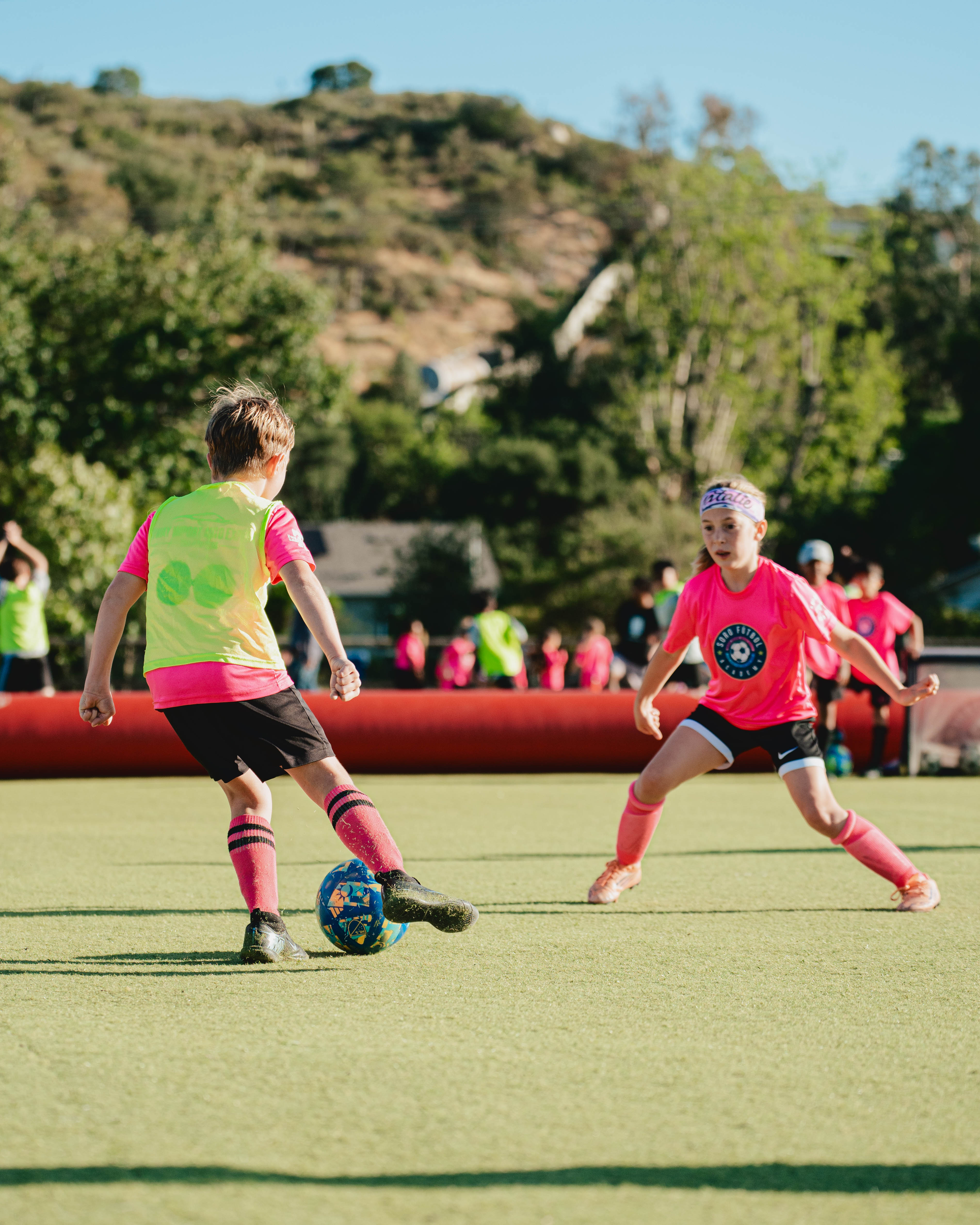
Most parents measure a soccer weekend by one number: goals. But goals are the noisiest signal there is. A player can have a brilliant game and not score, or a quiet one and tap in a lucky rebound. Real development shows up somewhere else, and once you know where to look, you can see it long before the scoreboard does.
The short version
- Goals and wins are outcomes. Development is the stuff underneath: touch, decisions, work rate, and confidence.
- Watch the first touch: it’s the single clearest sign a player is getting better.
- The fastest gains show up in 3–5 focused sessions, then compound over months.
- You don’t need to know soccer to track progress. You need to know what to watch.
Why the scoreboard lies
I’ve watched players walk off having scored twice and done almost nothing else right, and I’ve watched a defender have the game of their life without ever touching the box. If you judge development by the final score, you’re grading the weather. What you actually want to track are the habits that cause good games, because those are the things training can move, week after week.
At Soro we build everything on one line: every day is a chance to get better. That only works if “better” is something you can see. So here is the framework we use, broken into four markers you can spot from the sideline or the backyard.
Marker 1: The first touch tells you everything
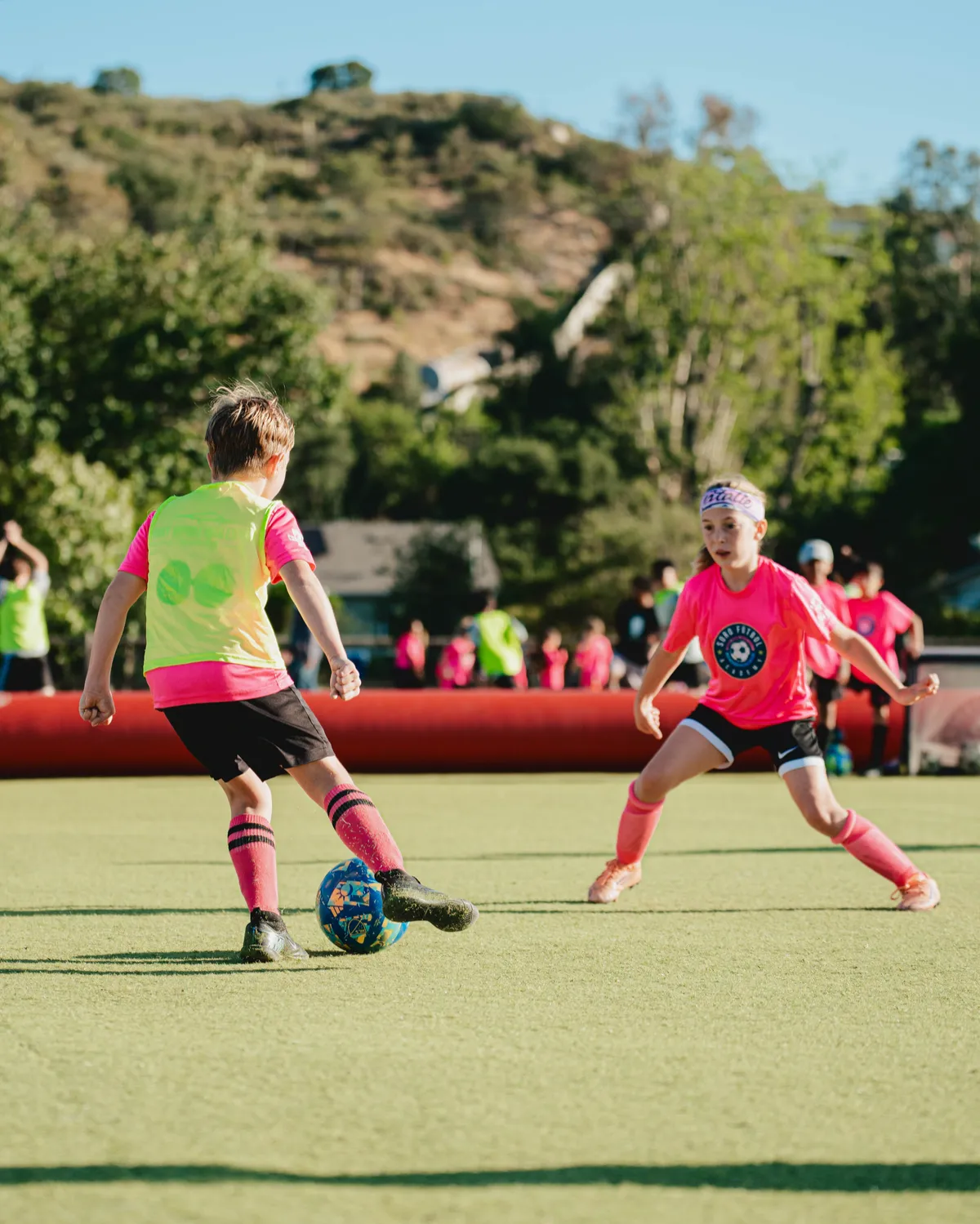
If I could only watch one thing to judge a young player, it would be their first touch: what happens in the half-second the ball arrives. A good first touch buys time and space; a bad one gives it away. Beginners stop the ball dead under their feet or let it ricochet off their shin. Improving players start to cushion it, guide it into the space they want, and come away already looking up.
You can see this from the sideline without knowing a single tactic. Just watch what happens the instant the ball reaches your kid. Over a season, the gap between “the ball controls them” and “they control the ball” is the whole game.
Try this at home
Toss a ball gently to your player from a few steps away and ask them to kill it dead in one touch, then again to push it to their left, then to their right. Ten reps each. The first week the ball squirts everywhere. Do it twice a week and watch how quiet their touch gets by week three. That quiet is the sound of improvement.
Marker 2: Decisions get faster before they get fancier
Parents often wait for the highlight-reel move: the nutmeg, the rainbow flick. But the first thing to actually improve is usually invisible: the player decides sooner. They check their shoulder before the ball comes. They pass and move instead of passing and watching. Skill moves come later; good decisions come first, and they win far more games.
- Receives the ball, then looks up to decide
- Runs into traffic with their head down
- Passes and stands still to admire it
- Waits for the ball to come to them
- Knows the next move before the ball arrives
- Scans the field, picks the open lane
- Passes and immediately moves to support
- Comes to meet the ball and demands it
Marker 3: Work rate is a choice, and it shows
Talent isn’t the thing I get most excited about. Effort is. A player who sprints back to defend after losing the ball is telling you something no skills test can: they’ve bought in. Work rate is the most trainable habit in the sport because it costs nothing but willingness, and it’s often the first thing that changes when a player starts to fall in love with the game.
Illustrative pattern from Coach Ray’s sessions, not a measured statistic. Use it as a picture of the trend, not a target.
Marker 4: Confidence is the one you feel
The last marker is the one parents actually notice first, even if they can’t name it. A confident player asks for the ball. They try the pass that might not come off. They make a mistake and want it back thirty seconds later instead of disappearing for the rest of the half. When a family tells me their kid “seems different out there,” this is almost always what they mean, and it usually spills off the field into how they carry themselves at school and at home.
What real progress looks like over time
Improvement is not a straight line, and it is not instant, but it is not mysterious either. Here is the honest shape of it for most players who train with intent.
That middle flat part is where a lot of families panic and quit. Do not. The plateau is where the body is quietly wiring in everything from the fast early weeks. Push through it and the second climb is the one that lasts.
Your 60-second progress check
Screenshot this and run it after a few games across a season. You’re not scoring your kid. You’re looking for the arrow to point up over time.
- Did the ball stay close on most of their first touches?
- Did they look up before the ball arrived at least a few times?
- Did they sprint back to defend without being told?
- Did they ask for the ball in a tight spot instead of hiding?
- After a mistake, did they want the ball again soon after?
- Did they come off the field wanting to play more, not less?
If you can only remember one thing
Watch the first touch. It’s the earliest, clearest, most honest sign that a player is getting better, and it moves fast with focused work.
Questions parents ask us
How quickly should I expect to see improvement?
Sooner than most parents think for the basics, and slower than most parents want for the finished product. Touch and confidence often shift noticeably in the first three to five focused sessions. The deeper stuff, decision-making and game reading, compounds over months. If you see nothing move in either after a few weeks of real work, come talk to us.
My kid scores a lot already. Do they still need this?
Often the goal-scorers have the most room to grow, because scoring can hide gaps in first touch, defending, and decisions. The question is not “are they good today,” it is “are they still getting better,” because that’s what carries them to the next level.
Is it bad that my player hit a plateau?
No, it’s normal and usually a good sign. Plateaus are where the body consolidates the fast early gains. The mistake is quitting during one. Keep the reps consistent and the next climb tends to be the one that sticks.
How do you actually measure this at Soro?
We keep it simple and specific: we pick one or two things a player is working on, say, first touch away from pressure, and we watch that, session over session. Private Training is built around exactly this, because we can aim every rep at the thing that’ll move the needle fastest for your player.
Can I help at home without a soccer background?
Absolutely, and you don’t need to know the game. Tossing a ball for touch reps, kicking against a wall, and asking “did you have fun” instead of “did you win” all help more than you’d guess. Ask us for a couple of simple drills that match your player’s level.
More proof, and the rest of Insights:
- First Touch: The One Skill That Changes Every Position, the technique behind Marker 1.
- Explore all six pillars →
Ask Coach Ray
Not sure whether your player is actually progressing?
You don’t have to book a session to get an answer. Send Coach Ray the question you’re actually sitting with. Which program fits, where your player stands, how training works around a club schedule. He answers these personally.
